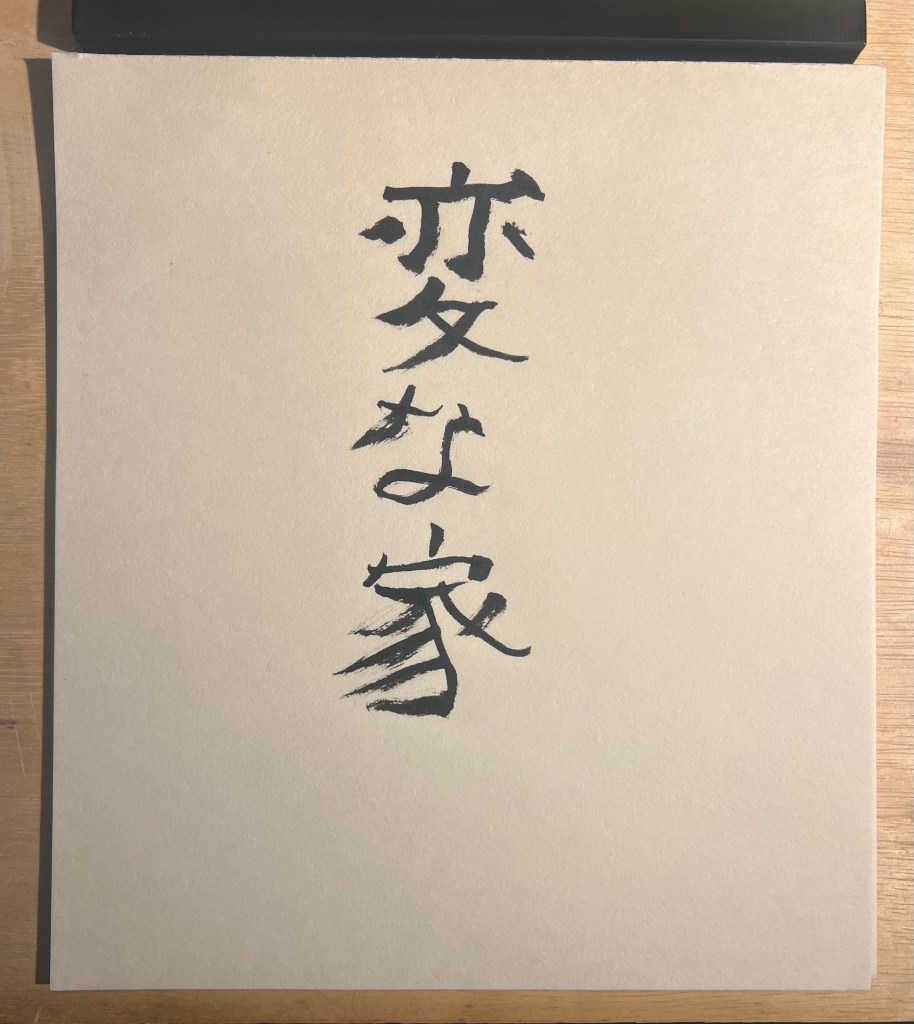
変な家 “Strange Houses” is a recent Japanese novel, manga and movie.
I saw a mention of it online and it instantly caught my attention, with just an image with a house plan and an air of suspense and mystery. I decided quickly to review it, after reading a few more overview and publicity items. I have not read anything in suspense or horror genres for a while, but I read architecture everyday.
Before you get to my review, I am putting the sources first so you can investigate or yourself. Do not be scared. Read and watch in your preferred format and language. Let me know what you think. I know I will revisit these and explore further.
SOURCES
Here is the novel and manga from Kinokuniya, just search “変な家”: https://united-states.kinokuniya.com/
The publisher of the English translation of the novel: https://www.harpercollins.com/products/strange-houses-uketsu
The Translator, Jim Rion’s website: https://jimrion.com/2025/09/30/translating-strange-houses/
The author, Uketsu, has a strong YouTube presence, apparently this is how these stories all began:
Here is a sample with automatically generated English subtitles and overdubs:
変な絵 “Strange Pictures” 変な地図 “Strange Maps” are also available.
There are some detective precedents and parallels, on some level “this “Strange Houses” is a sophisticated updated haunted house story, in full command of the secret passageway trope. There are Romantic and Victorian gothic echoes in the curses of heredity and architectural implications of the events described. The thought processes are meticulously logical, almost to excess, and this casts the author and architect duo as a kind of Holmes and Watson, at times. Overall the translation is completely readable and accessible, conveying scares and fears that are updated to our times.
REVIEW
The story raises questions about history. What is a house’s past life? And as a consequence, what is its death?
The simplicity of the modern house plan is not simple enough. Raises more questions about simplicity and what might seem generic. Real estate listings abound in Japan and realtor windows and publications display the flooded market of plans.
A terrifying plot weaves through the slew of vacant homes portrayed in the surplus floor plans. These ordinary houses, at first glance, after further inspection tell countless stories and mysteries from mundane to the most horrific.
READING OR READING INTO SOMETHING
You may wonder throughout, as I did, are the author and draftsman reading or reading into the plans?
The book starts so simple and clear with monologue and dialogue.
Reading requires a certain suspension of disbelief.
Towards the end, the book goes from architectural to genealogical and perhaps is easier to read for some. The intricacies of family trees may be hard to follow for those inclined to the floor plans, and vice versa.
The motives stem from a generational inheritance of a deadly oath and rivalries over the family fortune.
Kurihawa’s final word is a discourse on authorship, details, speculation and proof.
The Afterword’s monologue on inclusion of proof can be rephrased as “reading” and “reading into” where what is included is “read” and what is speculated is “read into”.
The “mysterious dead space” triggers all the suspicions, something about unused, inaccessible, unknown space that makes the imagination wander.
AFTERWORD
After finishing the first book and writing this mid-review, I actually travelled in Japan for 10 days. Just posted it now, after adding that finishing touch of my amateur calligraphy at the top. I had asked a Japanese friend about the book and she was reading these too, while travelling, she gave me a copy of “Strange Maps” which has not been translated into English yet. I have been skimming it and it has a lot of interesting imagery, trying to decode it but will wait until the whole book is translated.
Enjoy this series.
 drdrr.work