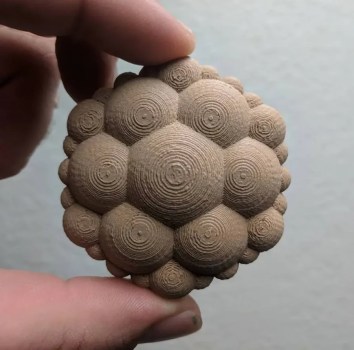

“There is a place for polishers of stones and for those who put stones together to make temples and palaces. But “experience” reminds us that a stone was once part of some stratum of the earth, and that a quarryman pried it loose and another workman blew the massive rock to smaller pieces, before it could be smooth-hewn and fitted into an ordered and regular structure.”
— John Dewey, Experience and Nature, pp.13-14.
This epigraph was clipped and saved with intent to go with another topic but after a phone call today, part of a tradition of twice, or so, a month catchup chats with a favorite former employer, it helped make sense of a recent puzzling interest. The friend and former employer had since heard a radio interview with the director of a film we watched together recently, and recommended that I listen to it. There was a certain rare vocabulary item, that he mentioned, but the audio on my car phone competes with the decibels of the full blast air conditioner this time of year. I will let you know when he replies about that.
VIEWING A FILM
A month ago, in 2025, late July, I noticed the title of a film in my peripheral, the word ‘Architecton’ caught my eye. I think it was in The Architect’s Newspaper. I instantly thought of a modernist, Kazimir Malevich who made works of the same name a century ago. Then turned to architectonics in a more timeless almost lithospheric sense. I knew it would not be a film about neither Malevich’s “Black Square” nor some kind of druidic Stonehenge or dolmen, exactly, but it got me anticipating something worth talking about. Before first watching the film, I took a quick glance at another review in The New York Times review. To avoid plot spoilers, I skimmed it only fast enough (maybe too fast) to see if it was something I would want to see, and asked the friend and former employer who also likes films like this, to see if he would join. I was drawn to this film, but I did not read the reviews enough to know what to expect. “It is a movie about stone” –that was about all I was prepared for.
If I were to have watched and either concurrently or immediately afterwards, put some words to what I saw, my account would be unique. That is often the case but it would be unusually unique, in this instance. Now I am reviewing it much later.
So in the first week of August, 2025, we went to the film at the only theater showing it for limited times and dates. From the start, I was not expecting to see destruction of so many buildings in Ukraine from Russian assaults to be highlighted . There was almost no story provided verbally, the friend I saw the film with whispered “Ukraine” but I had known and instantly recognized what I was seeing. I knew the destruction was in Ukraine but I was not certain in which cities. I have travelled in Eastern Europe and adore the people and places. In Architecton, there were no locations or dates given. This was a documentary but differed in that there were few verbal statements of “who, what, why, when, how” etc.
After the first sequences, some of the other locations were equally mysterious. The second sequence, (if I correctly recall) was a extremely uneasy landslide scene, I watched the Earth collapse and tumble, painstakingly slow for many minutes, I had no idea what was happening. I adore the Earth and Nature. What I was seeing was disturbing to see so many layers of the underground of Earth dismantled and upended. Much later I pieced it together with later images of mines, that it was a controlled landslide in mining. Some of the later sequences, were not instantly recognizable sweeping visual surveys (to a moderately travelled American) of places in the Mediterranean regions.
An enormous monolith at an archaeological site and a Roman ruin were shown, but they were not obvious locations to me. Some conversations with an architect and builders were philosophical. I studied architecture and adore it and these characters where interesting to watch and after so much non-verbal activity their conversations were a relief.
The two takeaways I can easily recall: 1) there is unjust destruction of Ukrainian lives, culture, and infrastructure in a wasteful ruinous war with no good reason, ongoing at present. 2) we might not see it this way, but we are altering of the Earth beyond recognition for all products and building materials, in this case, the overproduction of cement. Perhaps the second has a tenuous reasoning, “we need building materials” but I wonder if that is worth it.
Part of what I withdrew from the film and interview with the director’s message, is that a stone is much like us– a mountain is born, lives, and dies, and it is a whole, an ecosystem. In the film, mountains were levelled, mined, quarried, and materials were taken from these sources, extracted from nature, remade to build human civilization. They were irreparably altered, effectively destroyed in order to build civilization. And then they go wreck civilization, and bulldoze it into the hole left from mining the mountain in the first place. When they do this they destroy the Earth twice, twofold! not to mention the cultures, and peoples’ lives.
REVIEWING AFTER HEARING THE DIRECTOR’S INTERVIEW
As mentioned, the title initially evoked Malevich’s Architectons. These were constructivist basic rectilinear forms and multiplications of them. In the interviews, director would suggest, if making something of stone, make it “beautiful” so that no one would destroy it. No banal programs, no banal forms or rectangles. The selected architect in the film, even sees some of his portfolio as “horrible, rectangles in concrete”, the architect feels shameful of this bulk of their work that “is not beautiful”.
In the interview the directory discusses the Alexander Column at the center of St. Petersburg. If you know much Russian literature, this is mentioned in the poem by Pushkin “Ya Pamyatnik” a very ingenious verbal monument. Really a lot to unpack in that poem, (I included the text in Russian in a link with English commentary for language learners), might try that another time. On precedents in Russian poetry, there is also Osip Mandelshtam’s Kamen’ (or Stone in English). I did not include it in the sources, but highly recommend as it covers a lot of “beautiful” architecture that has been made of stone, because it is poetry and the film was so nonverbal. The Hermitage (also filmed in a slow and sweeping Russian Ark) and the Alexander Column, mentioned in the interview, are at the very center of St. Petersburg and are main attractions for the city, the construction of which seems a mystery to him. Another stone reference is in the very name of the city founder of this city St. Petersburg, as Peter means stone in Greek.
The director continues that urban idea for centuries is religion at the center, with streets focusing and leading to that center. He indicated a need for new centers, due to an ever more multicultural world. Architects asked knew no answer. Or had banal answers. Only one had a vision, “give it to nature”. I will admit I have thought in a design studio, ‘center the city on people and urban life, do not let cities sprawl.’ I love nature and I love cities. Will always think and rethink. So this vitally important message from the director after the hundreds of architects he spoke with, was the one that wanted “nature at the center”. This architect, selected by the director was our verbal guide in the film, very philosophical and worth listening to again.
Some last thoughts to consider, we can be distracted from seeing geology as a nature and as an organism. The stasis of stone may seem lifeless but it has a lot going on. From the interview, if we build in enduring materials, we have to find ways to build with “beauty”. As the director said in the interview, stories or readings of his films should not be the same across humanity, should we expect stories to be variable, but not beauty to be?
SOURCES
Dewey, John. Experience and Nature. Open Court Publishing Company, 1925.
Kennedy, Lisa. “‘Architecton’ Review: A Lesson Among Ruins.” The New York Times.July 31, 2025. https://www.nytimes.com/2025/07/31/movies/architecton-review.html
Pau, Kelly. “Architecton, a new A24 documentary, meditates on concrete, stone, and the future of architecture” The Architect’s Newspaper. July 17, 2025. https://www.archpaper.com/2025/07/architecton-concrete-stone/
Pushkin, A.S. “Ya Pamyatnik”. August, 1836. http://russianpoetry.yale.edu/poet/pushkin/ya-pamyatnik.html
Thorn, Jesse. “Documentary Filmmaker Victor Kossakovsky”. NPR. August 29, 2025. https://www.npr.org/2025/08/29/nx-s1-5521279/documentary-filmmaker-victor-kossakovsky
 drdrr.work